June 23, 2026, 11:09
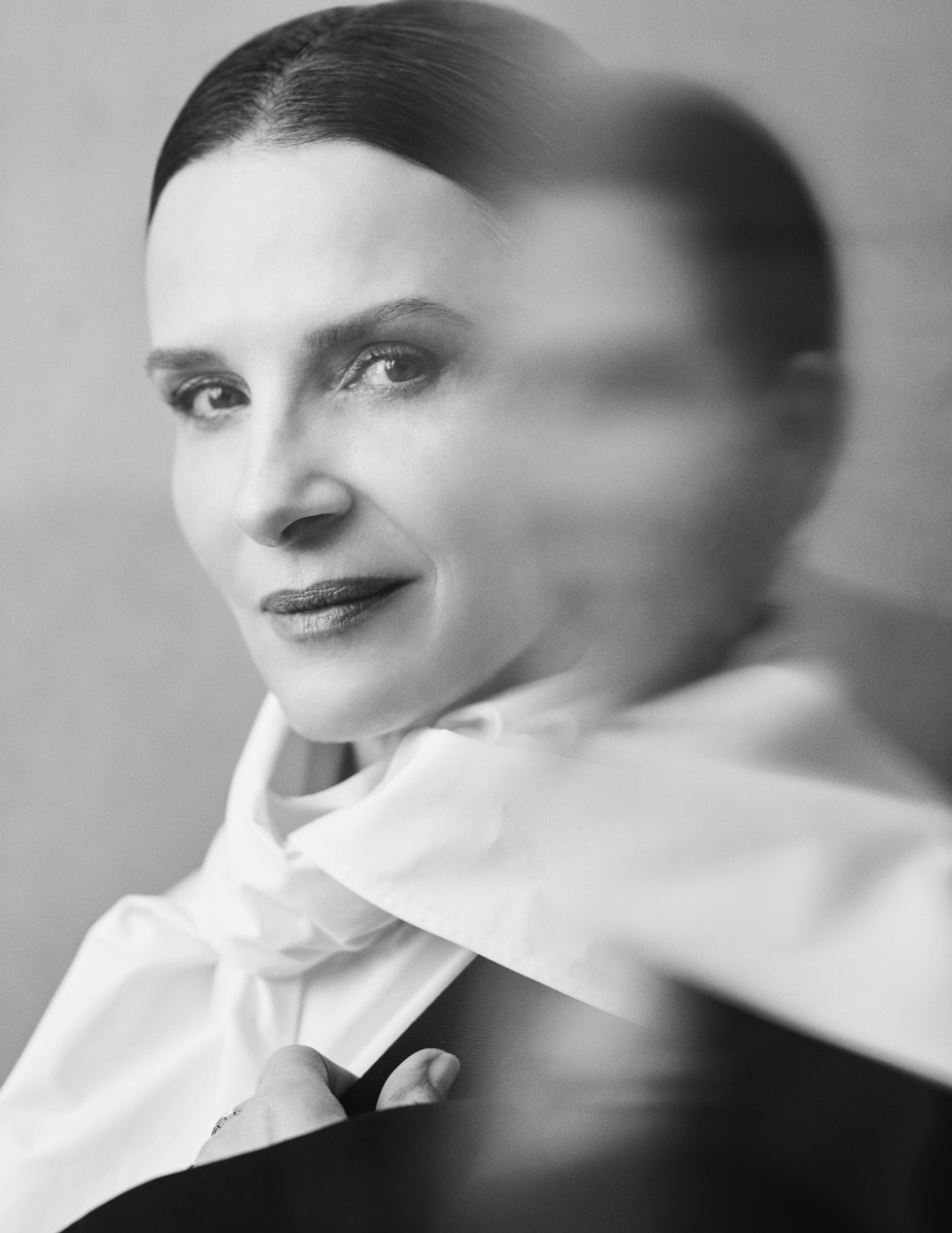
At the closing ceremony of the 60th Karlovy Vary International Film Festival, the Crystal Globe for Outstanding Artistic Contribution to World Cinema will be presented to the winner of an Oscar, a César, and four European film Awards, French actress Juliette Binoche.
Binoche’s first large role was in director André Téchiné’s Appointment (1985, Rendez-vous), where she played an ambitious young woman from the countryside who arrives in Paris with dreams of conquering the world of theater. Her intense and emotional performance resulted in her first nomination for a César Award and immediately catapulted her among the most closely-watched young talents in France.
In the second half of the 1980s and the early 1990s, her career was defined by her work for director Leos Carax, considered an “accursed poet” of modern French cinema. With whom he shot two films that redefined the French filmmaking style and confirmed the extraordinary acting talent of Juliette Binoche. Her portrayal of Anna in the stylized noir Mauvais Sang (1986) brought Binoche a second César nomination; and the drama The Lovers on the Bridge (1991, Les Amants du Pont-Neuf), one of the visually most captivating yet also most controversial French films of the 1990s, earned Binoche a European Film Award and another César nomination.
Even before this, however, Juliette Binoche appeared in Philip Kaufman’s The Unbearable Lightness of Being (1988). Her portrayal of Tereza in this adaption of the novel by Milan Kundera marked her ascent onto the world stage, among other things because it was her first film shot entirely in English.
Another important director in Binoche’s career was Krzysztof Kieślowski. The first part of his triptych inspired by the colors of the French flag, Three Colours: Blue (1993, Trois Couleurs: Bleu), is one of the best examples of European auteur cinema of the 1990s, and Binoche’s powerful performance earned her numerous awards, including the Volpi Cup for Best Actress at the Venice Film Festival, a César Award, and a Golden Globe nomination.
Director Anthony Minghella’s romantic historical drama The English Patient (1996) was based on the eponymous novel by Michael Ondaatje, which had previously been considered unfilmable. It won nine Oscars, one of which went to Juliette Binoche for Best Supporting Actress. Her portrayal of the nurse Hana also earned her a BAFTA Award, a European Film Award, and a Best Actress Award at the Berlinale.
Director Lasse Hallström’s charming British-American romantic drama Chocolat (2000), based on a book by Joanne Harris, was an audience hit thanks in part to the distinctive on-screen chemistry between Binoche and the charismatic Johnny Depp. The film brought her nominations for an Oscar and a Golden Globe, plus a People’s Choice Award for Best Actress from the European Film Awards.
Following the success of Chocolat, Binoche focused on working with leading independent arthouse filmmakers and confirmed her reputation as an actress who was not afraid to take on psychologically demanding and experimental roles.
For instance, she appeared in visionary Austrian director Michael Haneke’s psychological thriller Caché (2005), which took home a Best Director award from Cannes and a European Film Award for Best Film.
Another success came in the form of the intellectual romantic drama Certified Copy (2010, Copie conforme) by Iranian master Abbas Kiarostami. The film brought Juliette Binoche an award at Cannes, thus making her the first actress in history to win awards in Cannes, Venice (Three Colours: Blue), and Berlin (The English Patient).
Over the years, she has expanded her roster of strong female protagonists to include the painter Camille Claudel in Bruno Dumont’s biographical drama Camille Claudel 1915 (2013); an aging actress in Olivier Assayas’s psychological drama Clouds of Sils Maria (2014), a film that explores the issues of aging, women’s identity, and the acting profession; and Isabelle, an artist in search of love in the sophisticated intellectual dramedy Let the Sunshine In (2017, Un beau soleil intérieur). This last film, directed by iconic French filmmaker Claire Denis, earned Binoche a tenth César nomination.
In 2019, the European Film Academy honored her with its Achievement in World Cinema Award.
The romantic film The Taste of Things (2023, La Passion de Dodin Bouffant) by director Tran Anh Hung, in which Binoche and Benoît Magimel play a charming couple, is a unique sensory celebration of French gastronomy and middle-aged love. The film won a Best Director award at Cannes and was France’s candidate for the Oscars.
Binoche also appeared in The New Look (2024), an Apple TV+ series about the history of the fashion industry in which she played the iconic fashion designer Coco Chanel. Twenty-eight years after filming the Oscar hit The English Patient, she reunited with Ralph Fiennes in Uberto Pasolini’s epic historical drama The Return (2024), a retelling of Homer’s Odyssey.
In March 2024, Juliette Binoche was elected president of the European Film Academy, making her only the second woman in history to hold that post.
As a director, Binoche worked on the documentary essay In-I in Motion, which records a radical art experiment from 2007–2008, in which she and British choreographer Akram Khan decided to create an avant-garde dance-theater performance titled In-I.
To honor Juliette Binoche, the Karlovy Vary IFF will screen the films Certified Copy (2010), Three Colors: Blue (1993) and In-I in Motion (2025)
First-hand brews throughout the year.
Be among the first to learn about upcoming events and other news. We only send the newsletter when we have something to say.