June 23, 2026, 11:10
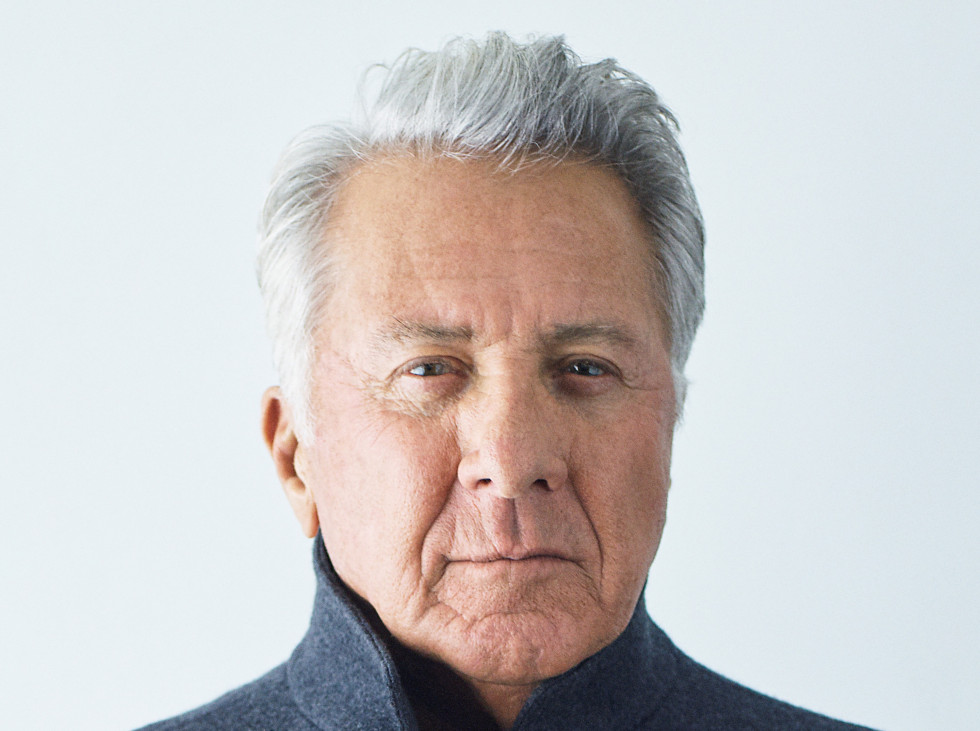
At the opening ceremony of this year’s 60th Karlovy Vary International Film Festival, the Crystal Globe for Outstanding Artistic Contribution to World Cinema will be presented to legendary actor, two-time Academy Award winner Dustin Hoffman.
Dustin Hoffman is one of the most versatile actors in the history of cinema, whose brilliance and masterful performances have completely transformed the ideal of the Hollywood hero. A seven-time nominee and two-time winner of the Academy Award, Hoffman has left an indelible mark on world cinema.
Hoffman’s career spanning more than six decades is defined by his willingness to play complicated, often socially marginalized protagonists. He is also an important representative of the Stanislavsky method. Thanks in part to his dedication to each role, his tenacity, and his pursuit of absolute authenticity, his filmography covers an incredible range of characters.
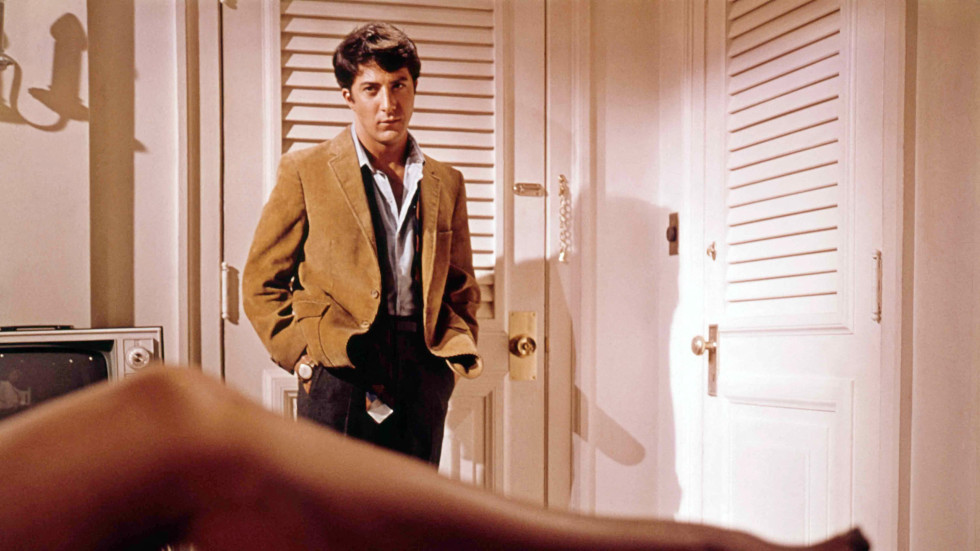
His first big movie role in The Graduate (1967) redefined American cinema. This story of a young man disoriented by social expectations brought Hoffman nominations for an Academy Award and a Golden Globe, plus a BAFTA Award for Most Promising Newcomer. His stunning performance as the ill, limping con artist “Ratso” Rizza in the raw drama Midnight Cowboy (1969) earned him a second Oscar nomination.
In the 1970s, Hoffman confirmed his reputation as an actor who was not afraid of psychologically fraught, and physically demanding subjects. In the unusual Western Little Big Man (1970), he portrayed the main character from youth until age 121 with an extraordinary believability. Hoffman’s transition from shy man into a fanatical, stone-faced defender of his home in Sam Peckinpah’s Straw Dogs (1971) is considered one of the most powerful performances in a psychological thriller to this day. In the famous prison drama Papillon (1973), where he appeared alongside Steve McQueen as the forger Louis Dega, he again showed his ability to transform an intellectual into someone who must adapt to the brutal reality of prison life.
The biopic Lenny (1974), about the controversial stand-up comic Lenny Bruce who fought both censorship and his own demons, brought Hoffman his third Oscar nomination. The political thriller All the President's Men (1976), in which he and Robert Redford played the investigative journalists who helped to uncover the Watergate scandal, is today considered a classic. In the cult thriller Marathon Man (1976), his character undergoes a masterfully sketched transformation from apolitical student into a persecuted victim forced to accept the rules of the game and to fight for his bare survival. Kramer vs. Kramer (1979), an emotional drama about a failed marriage and the fight for child custody, finally earned Hoffman his first Academy Award for Best Actor and also a Golden Globe.
In the 1980s, Hoffman appeared in his two most commercially successful and critically acclaimed roles. His portrayal of Michael Dorsey / Dorothy Michaels in the brilliant comedy Tootsie (1982), the story of an actor who disguises himself as a women in order to find work, earned him his fifth Oscar nomination and a Golden Globe for Best Actor in a Musical or Comedy. It also allowed him to demonstrate his distinctive comedic talent. Several years later, Hoffman won a second Oscar and another Golden Globe for his iconic portrayal of the autistic Raymond in Rain Man (1988).
Later, Hoffman began to move toward distinctive secondary roles and satire, though without ever reducing his focus on quality. One example is Steven Spielberg’s lavish fantasy Hook (1991), where he clearly savored his take on the film’s title bad guy, the eccentric pirate Captain Hook. The sharp political satire Wag the Dog (1997), which brought Hoffman his seventh Oscar nomination and another nomination for the Golden Globes. Runaway Jury (2003), a legal thriller based on a novel by John Grisham, was the first time he appeared in a film with his lifelong friend Gene Hackman.
In the comedies Meet the Fockers (2004) and Little Fockers (2010), Hoffman played Ben Stiller’s eccentric father alongside Barbra Streisand and Robert De Niro. In Finding Neverland (2004), a poetic look at the creator of Peter Pan, he played the theater producer Charles Frohman. In director Noah Baumbach’s Netflix-produced bitter comedy The Meyerowitz Stories (2017), he appeared alongside Adam Sandler and Ben Stiller as the grumpy, self-centered patriarch of a dysfunctional family. The film was shown in the main competition at the Cannes Film Festival. Hoffman and his son Jake played a father and son in the comedy Sam & Kate (2022). And in 2024, he had a small part in Francis Ford Coppola’s science-fiction epic Megalopolis.
In 1997, the Golden Globes honored Dustin Hoffman with a Cecil B. DeMille Award for “outstanding contributions to the world of entertainment.” And in 2012, he received the prestigious Kennedy Center Honors Award for lifetime contribution to American culture through the performing arts.
In 2012, Hoffman made his directorial film debut with Quartet, starring Maggie Smith, Tom Courtenay, Michael Gambon, and Billy Connolly. The film, which screenplay was adapted by Ronald Harwood (based on his original play), made approximately $60 million at the box office, and earned Maggie Smith a Golden Globe Award nomination.
Currently, Hoffman is starring opposite Leo Woodall in the critically acclaimed feature Tuner which was directed by Academy Award-winning director Daniel Roher. The film was a standout on the festival circuit, originally premiering at the 2025 Telluride Film Festival and went onto screen at the 2025 Toronto International Film Festival and 2026 Sundance Film Festival.
Next, Hoffman will publish his memoir, Look at Me, on November 10th through Simon & Schuster’s imprint Simon Six. The memoir will include stories from Hoffman's life, family, success and pursuing one's creativity.
Besides honoring Dustin Hoffman with a Crystal Globe, the Karlovy Vary festival will also be showing his breakthrough film The Graduate, directed by Mike Nichols and based on the novel of the same name by Charles Webb. The film earned Nichols an Academy Award for Best Director, was nominated for Oscars in six other categories, and also took home five Golden Globes and five BAFTA Awards
First-hand brews throughout the year.
Be among the first to learn about upcoming events and other news. We only send the newsletter when we have something to say.