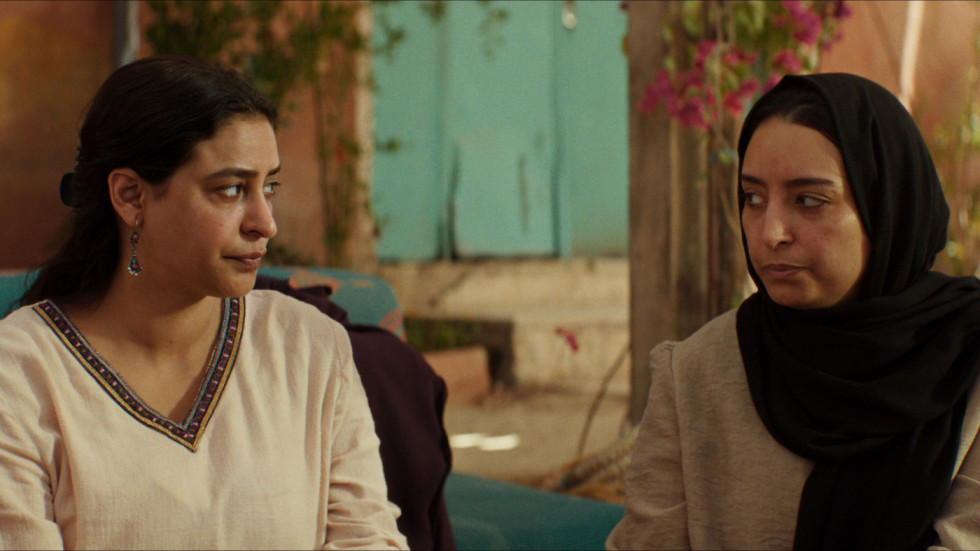
Warm applause followed the screening of The Station, in which director Sara Ishaq tells the story of a woman running a petrol station in war-torn Yemen.
Having previously worked in documentary filmmaking, Ishaq makes her fiction feature debut with The Station. “I’ve fallen in love with fiction recently. Its storytelling possibilities are limitless. It allows me to play more with visual elements and gives me tremendous creative freedom. And I don’t have to explain anything. The situation in Yemen is so complex that there’s always a risk of explaining too little or too much, and losing sight of the story in the process,” the filmmaker said during the post-screening discussion, expressing her enthusiasm for the genre.
Finding actresses for the feature, however, was far from easy. “There are no formally trained actors in Yemen, and I couldn’t simply contact a casting agency to find a cast. I put out a casting call on Facebook and WhatsApp, but I was afraid no one would respond. Yemen is a conservative country: women are expected to cover themselves in public, and their names are not meant to be known. But around 150 women applied,” the director recalled. She already knew three of the actresses she eventually cast and she spent months working with the others to help them feel natural in front of the camera. The actresses often received their scenes only once they arrived on set, and many of the film’s lines emerged through improvisation.
The film, which premiered in the Critics’ Week section at Cannes and is screening at KVIFF in the Horizons section, was made primarily with Yemeni audiences in mind. “Especially those living abroad. Since the war began in 2015, many people have left the country. I live in the Netherlands myself, where there are around 10,000 Yemenis. There are no cinemas in Yemen. A friend of mine has just opened one, so I hope we’ll be able to screen the film there. But unless The Station ends up on a VOD platform, it won’t reach a wider Yemeni audience,” the director said.
Although the film about female solidarity was shot in Jordan, it is set in Yemen and portrays the country’s reality, including cemeteries for martyrs filled with flowers and carefully watered despite the severe water shortages affecting the living. “It’s absurd. On the one hand, people are starving, and on the other, there is such luxury as lush gardens and swimming pools,” Ishaq noted.