July 08, 2026, 15:00
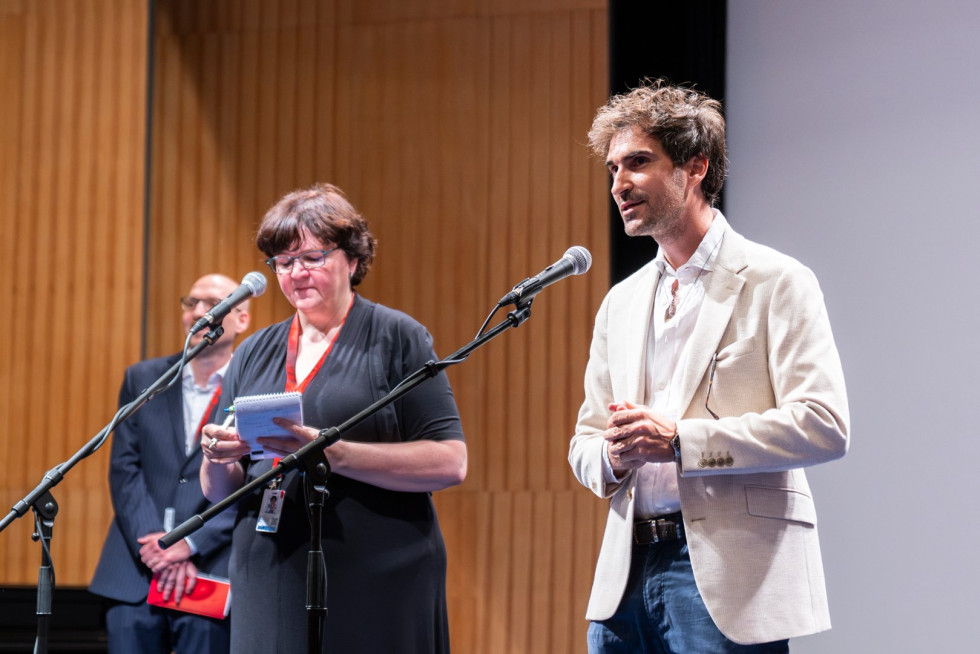
The documentary portrait The Hanging of Stuart Cornfeld, about the American producer behind films such as The Elephant Man, Kafka, The Fly and Zoolander, had its international premiere at KVIFF. During a late-evening discussion with a moved audience, the film’s Spanish director, Joan Bofill Amargós, explained how he came to work with Cornfeld. If there is one thing that defines the film, it is empathy and friendship.
“It actually happened by chance; it’s quite a bizarre story, really. I was the creative director of a start-up. At a hackathon, I met an artist, and we discovered that we shared the same favourite author – someone I was just about to make a documentary about. So I wanted to film an interview with him. He told me that would definitely be possible, but it would have to be the very next day. Then he introduced me to his friends, and Stuart was among them. It felt incredibly natural,” said the director.
Amargós had originally planned to make a feature film with Cornfeld. However, the production took a long time to get off the ground, and in the meantime Cornfeld fell ill. Amargós spontaneously suggested that he make a documentary about him instead, and Cornfeld agreed. According to the filmmaker, the most difficult part of making the film – which took several years to complete – was reaching agreement with the interviewees. “Coordinating our diaries was a challenge, especially as I live in Spain. Sometimes it’s simple – all you have to do is pick up the phone – but at other times you have to deal with assistants who aren’t always friendly. But you must be grateful. Stuart was much loved and respected. That’s what gave me access to people. I’m now friends with his friends as well, and we’re discussing potential projects together,” explained the director.
A key element of the film is its conceptual use of visual art. “I am a visual artist. I love creating portraits. The documentary is essentially a rather lengthy portrait. I call this combination of interviews and images a ‘double portrait’ – that was what the film was originally going to be called. But then Stuart came up with the current title. It was immediately clear to me that it couldn’t be called anything else,” said Amargós. By sketching the interviewees during the conversations, he was able to spend more time with them and encourage them to speak more naturally.
The way Amargós handled the material was unusual as well. “I’ve no idea how many hours of footage I had. A lot. It wasn’t just about filming; I recorded a great deal of audio too. I recorded absolutely everything, just in case – all our unfiltered conversations. When Stuart told me he had cancer, he told me as a friend over FaceTime; it happened on the spur of the moment,” said the director, describing an approach rooted in his close relationship with Cornfeld, who died six years ago.
First-hand brews throughout the year.
Be among the first to learn about upcoming events and other news. We only send the newsletter when we have something to say.